


I love the rule breakers in nature. People tend to pigeon-hole (sorry for the pun) birds and animals into categories not based on facts but on how we perceive them to be. We think that if they are one kind of critter they will act a specific way. Owls are a good example of this stereotype thinking.
I have written many times in the past about the red-headed woodpecker, which is a species of woodpecker that doesn’t really act like all other woodpeckers. They are a good example of a rule breaker.
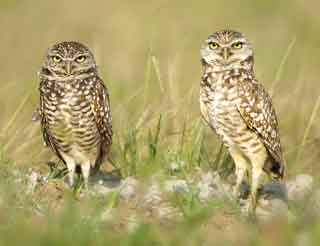
The burrowing owl (athene cunicularia) is also great example of a species of owl that doesn’t act like all other owls.
I recently was photographing some burrowing owls and was thinking about how much I enjoyed that these owls are not like all the other owls. First of all, they are tiny birds, not the large, hulking predators that we often think of when imagining an owl. In fact they are so small, less than 10 inches tall, that they hunt mostly insects like grasshoppers and katydids – not a very fierce predator unless you are a bug.
Half of the mystery of owls is their nocturnal behavior. Being active at night means it’s often difficult to see owls. Not the burrowing owl. They are active during the daytime along with the night, making them very easy to see and, more importantly, to observe going about their natural behaviors.
Many of the larger insects such as grasshoppers are most active during the day, so the burrowing owl takes advantage of this and hunts during the day. They will also catch small lizards and snakes, which are also active during the day. It seems this owl is perfectly adapted for the food it hunts.
Underground living
There are a number of owl species, such as the barred owl, that nest inside tree cavities. However the burrowing owl is the only one that nests in underground burrows, hence its common name. Sometimes the burrowing owl will take over an old prairie dog or ground squirrel burrow and widen or lengthen the burrow. Other times the burrowing owl will simply dig out its own nesting burrow.
Using their tiny feet, they kick loose dirt backwards to excavate their burrow. It can take a fairly long time to dig out a burrow, up to two weeks, but they use the burrow for many years in a row, making all the effort worth it. Many burrows are upwards of six feet long with a small chamber at the end. They will have extra chambers where they store food.
At nesting time the adults bring in chunks of animal dung, usually cow manure, to decorate the entrance to the burrow. Presumably, this smelly poop will attract beetles and other ground-dwelling insects that the owls then catch and eat. But they also collect other objects, such as bottle caps, that you can find at the burrow entrance.
Interestingly, the burrowing owls take well to man-made nesting burrows constructed of PVC pipe or sections of four-inch drain tile with a small wooden box at the end. The entire apparatus is buried about two to three feet deep. The owls seem to like these dwellings and use them often.
Burrowing owls also have very long, naked legs – much longer than most other owls. They also lack the feathers found on their legs and feet of other owls. This is because they live in warm climates where having feathers on their legs for warmth is not necessary.
All of these things make the burrowing owl so much different from all others owls. This makes them a classic rule breaker. One thing is for sure in nature – there are never any absolutes and there is always an exception to every rule. I love the rule breakers.
Until next time…
Stan Tekiela, Victoria, is an author-naturalist and wildlife photographer. He travels the U.S. to study and photograph wildlife. You can follow him on twitter.com and facebook.com or visit his website at www.naturesmart.com. His column appears regularly in the Advocate.